How the NHS failed me and mine.
What it did, to the most important person
in my life and how it could happen to you unless
we do something about it!
Powered By Blogger
Showing posts with label Misogyny. Show all posts

Thursday, 27 September 2012

Something Happened!

"I'm feeling strange, she said". I glanced across from the road in front. She looked agitated, and her voice became slurred, as if slightly drunk. I froze for a second and then asked her to smile for me whilst stopping the car. I put on the hazard lights and looked at her carefully."Lift your arms and close your eyes", I said. She did it. I got out of the car and went around to her door and opened it. She then said in a normal voice, " my arm's a bit numb and my leg too". I asked her to smile again, stick her tongue out and raise and lower her arms. She complied immediately. I got her out of the car and helped her stand. "Walk", I said, and slowly she walked at my side and we turned and went back to the car. "It's on the other side now and my cheek's tingling". "It's changed sides!" I said. She concurred; it had.

I was gripped by fear. The signs although small and transient were nonetheless bad. I did not want to admit it, but the woman I loved was possibly having a stroke! I needed to act and fast, just in case it progressed. I got her into the car went to the driver's side, got in and turned around, heading, not without some trepidation to that hospital, the scene of our past trials at the hand of the NHS. My car screamed it's way through the Friday afternoon traffic, headlights on to try to clear a path. It was 4.30 pm and busy. It was also August. The new intake of FY1's would be there to greet me no doubt, anxious to contradict the view that they were presiding over a another 'killing season' as August is aptly named in A&E, and that's just by the doctors.

I made remarkable time, all the time hoping I would wake up and this would be just a bad dream. It wasn't of course, it was real life. I parked illegally by the Ambulance bay and helped J', who was not very ill just very scared, into Reception. Taking grasp of the situation, I shouted that my wife was probably having a stroke and to help me. That worked. They got her onto a trolley straight away and pushed it into the Department and then left us! And so the waiting began.

I stood at the side of the trolley, holding her hand and trying to assure her that she would be fine. She still had some 'tingling' sensation in her right cheek and was extremely frightened, but little was happening and the floor was filling with patients on trolleys. It was more than an hour before we were taken to a cubicle and a nurse (well a nursing assistant) said she needed some 'bloods'. As she said J' may need some IV medication she would insert a cannula. I was about to protest but J' stopped me. I do not believe in invasive procedures 'just in case' and there was no way she was going to be infused with anything without considerable evidence of need, but I held my tongue. She was also completely useless at the task, took many tries and caused considerable bruising in the antecubital fossa.

A Doctor eventually showed up after some two hours and conducted tests; the usual smile, open/close your eyes, lift your arms etc. He also tried the resistance tests (pushing/pulling against his hands). He then departed and shortly after the ECG/EEG trolley was wheeled in and a nurse applied the twelve leads and conducted the test. I don't have too much knowledge of this procedure, but sufficient to see there was no atrial fibrillation, which was a relief. She went away again saying that a doctor would come and interpret the test results, but before this could occur they came to take J' for a head CT scan. I went with her; they sure as hell were not going to separate us this time! She was not in there long and when I asked the nurse she had no idea of the dose rate of radiation she had received. But, I knew it to be 2 mSv or about 20 chest X-rays and because it's the brain we're scanning that's a lot. Again we were told that a Doctor would be along to give us the results.

Well, we waited and waited. They had left the charts and I checked for obvious problems. Her BP and pulse were very high and blood sugar too at 8.5 mmol/L, although the stress of it all and the natural protective measures of the human body would have been responsible for this I was certain, although even so 190/95 seemed high for someone who regularly records 120/70. Then, over three hours into the event we saw a Registrar who basically said that nothing on the test showed any abnormalities and he went through the routine tests again. I said I thought it was time to go as J' was becoming agitated and the situation was becoming more harmful than productive. As the 'event' had crossed the mid line (changed sides) I was pretty certain it was not a stroke or TIA (trans ischemic attack) and voiced this opinion. He agreed, although was somewhat guarded but did think J' would be discharged quite soon, to my care.

As it was August I suspected he had just been 'made up' to this position and was not really confident in his decisions and he went away saying he would return soon. He didn't. Yet another nurse arrived to say J' was being taken to the Stroke Unit on the other side of town! And of course she had to go by Ambulance, not with me, unless I abandoned my car. I reminded her to remove the cannula which she did reluctantly and I said I would follow the Ambulance. I talked with driver while he waited for his partner to collect the paperwork. He told me to follow him out and he would ensure we did not get separated, which he truly did, slowing down if I got caught at traffic lights. It was nonetheless a nightmare, with me anxious and extremely stressed at the separation from J' as I did not trust the NHS or any Doctor I had seen thus far. I was also bemused as to what had occurred and hated once more the prospect of being caught up in the 'machine' that passes for Medicine today.

We arrived twenty minutes later and J' walked in accompanied by me and the driver. After a couple of minutes I was then allowed to be with her on the ward. They had given her a bed! BP and Pulse were taken together with blood glucose and oxygen levels. If anything BP had increased, to 201/95 and I was a beginning to feel the place we were in was more to blame for this than anything else. I wanted us to leave, but I also wanted to be sure that in so doing I was not putting J' in jeopardy.

 After an hour or so a nurse appeared who seemed to be in charge. She had decided to do a 'swallowing test' which apparently gives some indication of Stroke/TIA if the patient cannot swallow sips of water from a spoon. As the nurse was holding the spoon J' gagged a bit, which I found unsurprising and as she had already taken sips of water from a cup earlier, (which apparently she should not have done) I thought it was useless as a test. She also apologised for the delay in seeing anyone (but her) due to an emergency. Ah well, I thought that's triage for you.

By this time it was well after 10 pm and we were some five and a half hours into the event. And here's me thinking the first three hours were critical in stroke diagnosis! We sat there for another hour, with a sense of dread coming over both of us. J' was all for going anyway by 11.30 and said she felt fine in every way and just wanted to escape the clutches of the NHS which by this time we felt were just trying to cover their collective arse's. Just as we were about to do precisely that, a Doctor arrived.

He was quite affable and at least not patronising, recognising that we were not average punters and at least gave us some respect. He went through all the procedure again and also allowed J' to sip and then gulp water from a cup, which she did without problems. He said he thought an MRI would be useful together with an ultra sound of the neck to check for plaque in the arteries. He also said it would not be possible for this to occur now as the facility was not on line. Whether this was because it was the weekend or for some other reason he did not allude to, but after conducting a 'stress test' comprising J' blowing a stiff sheet of paper until it bent, for a whole minute, he decided he would discharge her to my care. Not before however, she was coerced into taking 300 Mg's of soluble aspirin and a promise that she would continue with this regimen until an appointment could be made for the tests by 'phoning them on Monday of the following week.

I discussed with him the likely cause of the event and that it did not seem to fit into the pattern of a stroke or TIA and he at least admitted that he was baffled. But he said until he had seen more test results he would not pass judgement and for safety's sake we should keep up the aspirin protocol and be prepared for other interventions such as Clopidgrel. Not on your life mate, I thought, aspirin, enteric coated at 75 Mg's maybe, but not that awful stuff! But at least we were able to escape, clutching a sheet of paper with advice about TIA's we exited the building as fast as possible, in case they changed their mind! It was gone midnight and we had been in their care for more than seven hours and still no real diagnosis!

We reached the car and I opened the door. I held J' in my arms before she could take her seat, grateful that she was still with me. It was a long moment before I let her go; I never really wanted to let her go ever again but I did and we traversed our way to the entrance and sped off back to the 'hovel' both emotional but relieved to have escaped, relatively unscathed from the NHS and the events of the day.

At home we were both agitated and bemused. We had no idea of what had occurred or its reason. I know Diabetics are more prone to any sort of stroke than the normoglycemic community but all other factors were not present. She maintains good control of her diabetes's with HbA1c of the low 6%. She has excellent low BP to the tune of 120-130/70-80. She does not smoke, takes regular exercise and her clotting factor was low normal. If we ignore the 'drivel' about cholesterol (her non-fasting total is 6.5mmol/l total lipoprotien) but most scientists know that in a women this is viewed as 'protective' rather than indicative of any danger. So what may have caused this? Obviously the Neurologist did not know because he said as much. It would be rare, even if there was some plaque formation that it would cause a bilateral blockage almost simultaneously, but that would have to be determined for certain by MRA/MRI. So we would have to wait for this determination before reaching any conclusion. And of course that would not be until Monday.

We spent a somewhat agitated weekend, with me watching her like a hawk, not letting her drive and giving her a daily dose of enteric coated 75 mg aspirin, just in case there was any possible problem, to be reviewed in the light of further tests. Aspirin is not a drug I like and cannot take myself due to a past ulcer, but J' has a very strong stomach and never even gets heartburn, ever, so I was confident that a few days intake would likely do little harm. Long term use was not something I wanted to contemplate (yet). I did increase the dose of Omega 3 capsules to 2.10 gms (in 3.30gms of capsules) as this is a fairly benign anticoagulant,( from its previous 1.40 gms), although I knew it's effect would take some time to be realised. I also took her BP and pulse regularly and as sure as predicted, it returned to usual levels within 24 hours of the event, in fact by Saturday night it was 118/71 and the pulse was 76!

Monday came and I 'phoned up about the appointment the Neurologist said would be made first thing. They hadn't even heard of us! They promised to call back. They didn't. At 12 noon I rang back once more and was told that it was now too late for that day but 11.30 Tuesday was the time they had arranged. So that was another day wasted, and so much for the urgency of the tests the Doctor had said were essential, and had to be undertaken that day!

After another fitful night, whilst we were preparing for the day, we then had a call from the Hospital. They had a spot available as soon as possible, could we come in straight away? Obviously we agreed, fools that we were. We got there and after another bout of form filling were ushered in to see the duty Neurologist Dr. W. Without an doubt whatsoever he was dick! Uninterested, remote, rarely looking at the patient, he said very little, asking a few questions and making a very short examination. Just the pulse, wrist and carotid and the usual tests for stroke. He conveyed no view when I asked him about the symptoms crossing the mid line just stared at his screen. He did say J' should have an immediate MRI of the brain together with an MRA with contrast dye, of the neck, no doubt to check for any plaque in the Carotid.

He then told his female assistant ( a trainee) to arrange this and we were dismissed. We sat outside awaiting the news and the young woman came and told us she could not arrange it until 1 pm, which was some two hours away! Not enough time to go home and then struggle back across town and find a space again in the immensely expensive car park, which was half a mile from the unit. She then said she would need to install a cannula for the dye infusion, so we would need to come back to the unit for this before we went to the imaging unit for the MRI/MRA.Why they had not already arranged a test  when it was obvious that it was a need, and the entire reason for our visit, escapes me, but obviously our time was of no matter and theirs at a premium, despite the fact that they would be hard pressed to arrange an orgy in a brothel.

So we went into the Hospital and tried to obtain some food and drink. Well there was coffee, of a sort. The food was all 'junk food', all very high in carbohydrates and totally unsuitable for a diabetic, and frankly it was all highly processed rubbish. We took a further walk through the grounds back to the unit and the trainee then came to insert the cannula for the dye infusion. She seemed different now the boss wasn't around and told me she had researched the dye side effects whilst we were away and attempted to assure us both that it was relatively benign. I discussed her training whilst she was at work on the antecubital fossa. She had just completed FY2 and was now a GP trainee and knew a number of my friends in research and emergency medicine. She was also excellent at inserting cannula's, with confidence, gentleness and expertise that produced no pain or bruising. So we trotted off to the MRI facility half a mile away.

I was stunned when I saw it. It was a brand new building, in the grounds and provided on a 'contract' basis by a private provider; more cash for the private sector! Anyway, after a minor altercation with the 'prick', who drives the machine, J' went away to return fifteen minutes later, sans cannula and in no distress from the dye infusion which said she hadn't felt. We had been told we would get a 'phone call later with the results after they had been evaluated by Dr. W. In fact his secretary rang about 5 pm to tell us that everything was normal and that nothing at all had been found! I'm sure the sod's always get their underlings to provide this sort of information just so you can't ask questions, because we both had many, but for lack of anything else we could do, we would have to wait for the letter they would send.

We had a long wait. After four weeks I rang the unit and spoke to said secretary who informed me that we were not getting a letter but one had been dispatched to the GP some weeks ago. Upon further probing I found they had sent this to our GP of five years before and not to the current one, despite the fact I had filled forms in with the correct information; twice! She did say she would ask permission of Dr. W  for us to receive a copy. I was almost choking with anger by then. "You mean that we are not allowed to see what has been determined about my partners event, but you, our GP and anyone with the access password can?". I said I felt it both insulting and patronising that such should be the case and I would complain in the strongest terms if this was not rectified. She promised to do what she could and I left it there. I explained it to J' who responded with a few expletives,somewhat worse than any in this post.

We did get that copy after another week, and it simply said that J' was healthy without any evidence at all of any abnormalities and, curiously, 'the rest of her history is non contributory'. What! The trauma surgery your colleagues botched, the diabetes they missed, the keto-acidosis, the fact she cannot take vigorous exercise, because the hemiarthroplasty starts to hurt after half a mile, and the chances of revision surgery succeeding or her surviving it, recede with every passing year!

It's also interesting that at no time was J' asked to give any informed consent, written or verbal, for any of the investigations, nor was anything ever explained in any detail until I pressed those involved to do so, and was able to demonstrate knowledge and qualification. Even then, they spoke over J' to me, or directly at me. Bunch of patronising misogynist prats. I really shudder when I think what may have occurred had I not been there to fight her corner. And what is my take on the event? I do not really know, although I suspect it may be microscopic particles of debris (plastic/bone/metal) from the hip implant momentarily lodging in the brain. We are at the stage when the joint will be producing quite lot. Active people can wear them out in five years. J's active and that's next June.

This, dear patient reader is the reason why my blogging has been somewhat curtailed of late. These events have had a profound effect on us both, highlighting the fact that our grasp on life is at best tenuous. But that can be said of us all. But, wherever possible we should all keep away from hospitals; they're full of sick people and not all of them are patients.

Thursday, 10 May 2012

An 'Ambiguity of Evidence'.

So says Dr. Edward Stefanek with regards to Cancer Screening in an article in Medscape Today. He cites the 'summoning' of women for mammography, contrasting with the 'informed choice' paradigm that exists for men with possible prostrate cancer. He suggests too that this is paternalistic, I would say more likely misogynistic as well, because men are viewed as being participants in some sort of  'club' by simple virtue of their sex, when it comes to honesty in health care. In fact the first rule of misogyny (just like 'fight club') is that we don't talk about misogyny.

Well, I for one don't want to belong to any such club, fraternity or organisation. I do not want to labelled as a feminist either, because I do not wish to 'steal' the term from women. I want to be known as an equal, and one who is just as vulnerable, fallible and more importantly human as is any woman. I am not strident (except in this view) aggressive or demanding of any submission (from women) and feel some men are 'spoiling' it for the rest of us, and the greatest of these are the those who lurk in Medicine, and within that cohort those who continually ram home the message that 'screening saves lives'. Well, patently it does not. It may facilitate an intervention that may do so, but screening per se cannot save any life.

Screening for all cancers is constantly on the rise, despite the fact of the paucity of evidence that exists to support it's continued promotion by the NHS. Medscape also featured Carole Schroeder  who has an interesting blog that provides good information for men about prostrate cancer, but the main thread is that for far too long, women in general (and occasionally men) have been subjected to a constant tirade that they are taking "unacceptable" risks with their health unless they submit to screening. Mammography leads the way despite the fact that recent studies have clearly shown that it is not effective for most and can be catastrophic for some as I detailed in a previous post. There is now a groundswell of opinion rising to ensure that all those who participate are fully informed of the risks, benefits and harms of the process, instead of the current paradigm of inflating the the risks of breast cancer and concealing the harms of mammography. The the BMJ highlighted this last July and I wrote about the innate misogyny displayed in many of the testing regimes, aimed at women, only recently.

A recent development however, is the call for younger women to be 'screened' for cervical cancer, which to be frank is bordering on the dangerous, but when a young Nottingham woman was diagnosed with cervical cancer the pressure was applied both at local and National level for this cohort to be screened. This is despite the fact that only ten deaths from this form of cancer in 20-24 year olds was recorded in the whole of England and Wales in 1988-1989 and it has subsequently 'fallen of a cliff in mortality terms down to 3.7 deaths per 100,000 by the turn of the century (overall mortality). So despite the fact that Natalie Carney did actually have cancer, which is appalling, should we then create a whole new subset of tested women because of one isolated case? Women in this age group often have abnormal cells but it is well known that virtually all of these regress spontaneously without intervention, which is largely why young women are not screened. In fact most screened abnormalities are either benign or regress generally but 'over-diagnosis', just as in mammography, dominates cervical screening. But there is a bigger issue, as always and that is Coercion.

Persuasive tactics predominate all cancer screening testing. The NHS and it's GP's in particular values it out of any proportion to the benefits, but it is a political imperative, maybe to show that they care (sic). 'List and chase' was the tactic employed in the 90's along with 'hit that target', all to encourage GP's to recruit women to the Cytology Screening Programme so they could get their target payments. Yes, they get paid substantial sums for achieving an 80% uptake of testing in the 25 to 64 yr old practise cohort. In fact until payments were commenced uptake was quite low, but once the money was there that all changed. One GP is alleged to have said, "We are afraid of missing our targets, not missing a cancer" (Journal of Medical Ethics 1998;24:151-157). I think that sums up the position quite nicely.

There is little in the way of information provided to women targeted, just exhortations that 'you put your life at risk, by not complying', or ' REMEMBER - regular smears saves lives' and other such coercive statements that are simply not borne out by the evidence. A balanced view is never given and feminine autonomy is usurped by this type of inflammatory rubbish because experts cannot predict the incidence of abnormal smears nor those that will definitely progress to invasive cancers. Quite large numbers of those tested are then subjected interminable waits to find out if there cancer is real and many go on to be treated with surgery or radiation for no useful purpose other than 'being sure'. Those who try to shun the tests are often singled out for bombardment with 'phone calls, text messages and mail shots that are akin to blackmail, foretelling all sorts of dire consequences if they continue to abdicate their responsibility to their partners and families.

Current leaflets explaining the test and likelihood of cervical cancer outrageously inflate the benefits saying that screening is responsible for the drop in the rate of mortality, when it was falling before the testing system got underway and there is no evidence whatsoever that the fall in incidence or mortality was due to screening. Almost 30% of actual cancers occurred in women who had adhered totally to screening guidelines. There were 6231 women diagnosed with cervical cancer between 2007 and 2010, in a population in England of 14.6 million. 44% of those cancers were classed as 'micro-invasive' and were conservatively treated by cone biopsy or loop excision (and of course may not have been true cancers). So that is approximately an incidence of 14.4 per 100,000. Or approximately 8 per 100,000 for those with Stage 1B+ Cancer or worst. At 1 in 3000, you are considerably more likely to to be hit by a meteorite ( I know I didn't believe it, but I did check) so let's get this into some sort of perspective. Of course as you get older the incidence and mortality increases, as will be seen from the graph. That of course is in accord with the aetiology of this cancer which can take many long years to develop. But it still remains quite rare. So does it warrant all the attention, cost and stress to women?
Numbers of deaths and age-specific mortality rates for cervical cancer in the UK
More important however, is the treatment of women as a whole as incapable of making an informed decision about their lives and the ethically unacceptable tactics employed to persuade them to bow to the dubious manipulation of the State. We all are (or should be) autonomous adults and it's completely unethical to attempt to infiltrate any of us with dubious medical opinions, statistics or advice instead of treating us a agents of our own destiny. It is generally women rather than men that are treated in this way and it is generally men who do it. I am ashamed of my gender, especially those called 'Doctor'.

Perhaps the words of Professor Michael Baum, one of my medical hero's may be the best ones to end with. They are here.


Thursday, 1 March 2012

Loss of Innocence (Part One- Addendum)

It was my intention to move straight to my second instalment of the saga of J's treatment at the hands of the NHS and in particular the part played by the 'Orthopod's'. However, the intervention of the furore relating to prosthetic hips has given me the opportunity to vent my spleen about the ridiculous situation that exists in the treatment of those unfortunate enough to need any form of hip surgery.

You would think that in view of the large number of procedures undertaken in the NHS that the science would be driving the procedure, when in fact it is more custom and practise tinged heavily with vested interests and hubris. Orthopods (Orthopaedic Surgeon's) are generally viewed by Medicine, even other Surgeons as lacking in subtlety and intelligence. My view is somewhat more colourful and I view them as 'butchers' more than surgeons. Sure, it's a hard job, requiring physical strength and endurance, almost as much as skill because of the need to saw, hammer, drill and slice, with instruments more akin to a construction site and a butchers shop than an operating theatre. And the repair (or often not) of damaged hips epitomises this more than any other procedure. Dealing with hip trauma is probably the most difficult and dangerous procedure any surgeon undertakes. It is important then that the patient is paramount in the evaluation of which path to pursue as regards the protocol that is most efficacious.

It is not beyond my purview that many 'orthopods' are failed Rugby players, not that I attach any significance to that, except to say that their adherence to scientific evidence as a tenet of their professional conduct is perhaps somewhat lacking.  It may sometimes be evident that their judgement of certain medical devices might be coloured by the presentation they last 'endured' in Barbados about the latest implantable device from one of the many makers of such engineering masterpieces (sic). One of these, of course is Depuy, a subsidiary of Johnson and Johnson (a family company). They make the 'Pinnacle' implant, which is a MOM (metal on metal) device using cobalt chrome, and this has been indicted as being subject to early failure. And more importantly, (I feel) of causing the migration into the bloodstream, bone and other tissues, of wear particles that are potentially life threatening in a number of ways.

The BMJ in conjunction with Newsnight undertook a study recently that highlighted this problem that is faced by a number of  'younger' patients who have been ill served by the installation of this design of prosthesis into their acetabulum. In truth the BMJ article is somewhat more comprehensive in it's condemnation of the device than was Paxman in the interview with the head 'honcho' of the MHRA who, it would seem had full knowledge of the 2010 recall by Depuy of it's ASR implant (Pinnacle) but seems to have done little about it. Nonetheless I did enjoy Paxman's taking Kent Wood's to task about the fundamentally supine attitude of his organisation when it comes to 'approving' medical devices, which essentially amounts to a review of the specification provided by the makers, because there are few if any clinical trials undertaken, except using the patient cohort as 'guinea pigs'.

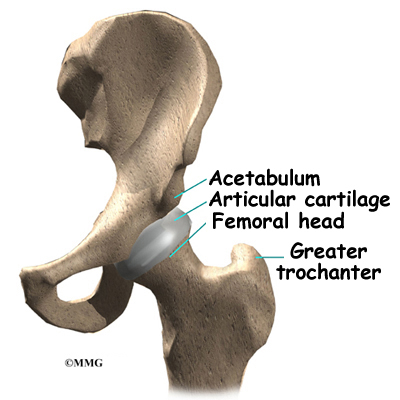
As an engineer first and biologist second (but linking the two), I cannot understand how anyone would recommend the installation of any ball and socket device, in the human made from cobalt chrome that will be subject to metal on metal wear or indeed any frictional wear. The cobalt element of the  material does have high strength, coupled with excellent corrosion resistance, but whilst it's salts are used by most animals especially ruminants, at high levels it can be toxic and it's compounds have been responsible for cardiomyopathy (heart muscle disease) in humans. Chromium is also quite toxic in its (VI) form except at very low levels and is a known carcinogen as well as being responsible for damage to the kidneys, liver and blood cells. Having said that, if this material had only been utilised for non-frictional component parts it is unlikely that there would have been a problem, but friction in metal to metal bearings throws off metal ions, eroding interfaces which increases gaps in mating surfaces thus introducing 'free play'. This is of course exponential, so the more wear the more the acceleration of that wear. The consequent contamination of the tissue surrounding the acetabulum and femoral stem and migration of these metal ions into the bloodstream promotes high levels of bone loss, cement collar erosion, cartilage damage, and many other toxic side effects that have yet to be fully evaluated.

When you introduce any 'foreign' body or substance into any living organism you have to be very sure that by so doing you are not making matters worse, but obviously this did not seem to impinge upon the corporate 'psyche' of J and J. Greed seems to have been the driving force and don't forget this company had last quarter earnings of $16.3 billion despite having to pay out $3 billion for the Pinnacle debacle in the US.

This design of implant was targeted at the younger audience and was sold as a 'low wear' prosthetic so as to avoid the need for revision surgery because this cohort tends to be physically very active. Activity promotes wear in any joint be it in humans' or in machinery, unless you can regularly lubricate that joint. There is some value in the concept of synovial fluid performing this function (the hip joints natural lubricant and hydraulic 'cushion'), but as this 'capsule' has effectively to be 'burst' during surgery for access, it is unlikely to function as it was designed by nature thereafter. The simple truth is that in our haste to address the increasing needs of an ageing and increasingly joint challenged society we have lost sight of many of the needs attendant upon the production of manufactured  joints for implanting. And sadly it is not just in the metal to metal prosthetics that we have a problem.Many different materials have been tried over the years, especially plastics, sintered metals and ceramics. If one views success as being a bearing surface that does not wear out at all, and what wear does take place as being entirely benign, manufacturers have failed. Failed miserably in this context because all arthroplasty components have a finite life, so except in elderly patients, they are unlikely not to need revision at least once and in young patients possibly more.

UHMWPE has been the material of choice especially the newer 'crosslinked' varieties, for the manufacture of joint surfaces for some years now. Ultra high molecular weight polyethylene displays admirable self lubricating properties together little moisture absorption and considerable strength. But combinations of both this, ceramics and other metals have been tried, to come up with this goal of the perfect implant. None, including UHMWPE is devoid of particulate contamination of the tissue and blood of the recipient, although this last one is probably more benign than others. None are entirely so, and all wear is at a rate in proportion to the amount of use. So active people wear their implants out quicker.

As regards the NHS; well they invariably go for the cheapest they can get away with, THA (total hip arthroplasty) using cemented stems and UHMWPE bearing surfaces is usually the type most will get for either trauma repair or elective surgery, generally for osteoarthritis of the hip. Except for non-displaced or slightly displaced fractures, when the waters become extremely muddied. This is because of the payment system that prevails in trauma care which is based on a tariff for the most expensive treatment involved in a hospital 'stay', and the desire to keep the costs low, avoid re-admission and get rid of you as soon as possible. Trauma patients 'bugger up' the system, take up unplanned beds and play havoc with operating lists and theatre time allocations. If you aren't fixed quickly it costs more than the tariff. If they do something that's possibly short term, even if it's in your best interest as a patient, it's likely not to happen. If you are re-admitted for something that's a result of your initial admission, they won't get paid for it, so you are a burden.

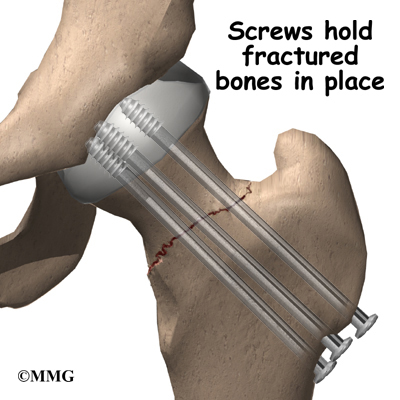
This has resulted on many occasions in the almost complete lack of hip repairs in trauma patients because of the incidence of failure. This is despite the fact that preservation of the native acetabulum and femoral head is the ideal solution. Failure rates of hip repairs are the subject of much conjecture but they are only about 25% in reasonably healthy people up to 65 or 70 years. They are also quick to do, much less traumatic, and can be undertaken, often without general anaesthetic, and sometimes without incision. Generally this requires nails or screws to fasten the joint together which are then left in place. If this fails, then you can go on to have a full procedure at a more leisurely pace and not as an emergency. But it won't happen, because if it fails, the Hospital involved will not get paid for the subsequent and much more expensive procedure to fix it because the 'system' attributes the blame to them. You will also have a longer recovery time as your leg will not be load bearing for some time, but you will be in possession of the best hip joint there is; your own! What you will likely receive for trauma, even if the fracture is so slightly displaced as to seem much like a 'crack', is the Hemiarthroplasty; the worst of all prostheses, because it's cheap, has a short operating window, and is likely to last five or six years, so they will be beyond the date whereby failure would not be paid for under the tariff.

The NHS likes this implant despite it's short life because it also has a lower dislocation rate, can be installed by relatively lowly surgeons and through the side of the hip. This is despite the fact that more damage to the muscles and cartilage ensues in this approach. In addition as this implant simply is a metal ball, sometimes with a plastic floating cup (bipolar version) which is literally 'pushed' into the acetabulum. It also brings in some cash from the Primary Care doctors for monitoring X-rays that have to be taken to check up on wear of the bony cup that is the acetabulum. It's almost beyond belief that anyone would consign a patient to receive a big metal ball 'stuffed' into a bone socket that's absolutely certain to wear away and cause pain in quite short order as it articulates with movement. Metal on bone; it doesn't take a scientist to work out which will wear first, especially in a younger, active patients, now does it? Alright, for the 85 year old with little in the way of exercise and a number of co-morbidity's, it may, just maybe justified after a fall, but as a first line treatment for most it's a cynical manipulation of guidelines and flies in the face of good practise and the welfare of the patient to reap the reward of the tariff.

Hip joints are one of the wonders of nature. They are a 'ball and socket' certainly, but one that has an interference fit that has a regenerative liner of cartilage and a fluid cushion that acts like the hydraulic fluid in a shock absorber, being 'squeezed' out and in as you walk and load the joint. As engineers we haven't even got close to this model nor are we ever likely to. There's no demand, well not from the medic's, the NHS and certainly not Big Pharma's devices wing. The patients, well we're the last people they care about, so long as the 'gravy train' keeps rolling. J and J's rubbish prosthesis is symptomatic of the 'device industry' and the final irony, as I keep hammering on about, is that most of these devices are implanted in women, because the female hip has much more 'articulation' than that of men to enable child birth, rendering their hips more liable to breakage. So women, often elderly women or those viewed as elderly by the NHS are the main recipients especially of 'hemi's', often when they and their peers see them as 'mature'. More misogyny, heavily tinged with ageism. Well there's a surprise!

Sunday, 22 January 2012

Health Misogyny

Health care in general and the NHS in particular, places far too much reliance upon the notion of prevention and 'early' detection of disease, or rather the 'markers' of what is assumed to be a possible or maybe disease, or condition. This particular trait, and it is redolent of all health care models throughout civilisation, is directed more at women than men.

Perhaps the concept of women being fragile, vulnerable to all sorts of ailments diseases and conditions, that are either particular to, or more predominant in their sex than males, is where this founded. And, of course when this process of labelling all women as potential harbingers of their own doom came to pass, it was men who set about building the edifice of treatments, allocated specifically to the 'fairer' sex, to save them from their 'treacherous' hormone ravaged bodies. And what a crock of s**t, it has all turned out to be.

Mammograms, Cervical Smear Tests, Hormone Replacement Therapy, Vaccines targeted for Cervical Cancer, 'Medicalisation' of Pregnancy, Osteoporosis treatments (mainly for women) and the general consensus that women need 'protecting' from the ravages of their own predisposition to ailments arising from their femininity. Men and some women, are unable to resist the urge to prod, poke and peer into the extremities of women simply to reassure themselves, and vulnerable women, that all is as it 'should be'. A whole industry in Medicine and Health care has sprung from this, including the desire of men, often imposed upon women, to aspire to a stereotype image of the size 10 with big breasts and shapely bottoms. Culminating of course in the Breast Augmentation, Reduction and Botox protocols that has spectacularly 'gone wrong' in the case of the PIP debacle.

I have written at length about Screening for Breast Cancer in the past and  more evidence has comes to light about it's futility for most, and the lie perpetrated that many are 'saved', when in fact the so called cancer found, is not really 'cancer' at all. And it would have likely responded to 'watch and wait protocols' rather than going in with the knife, radiation and chemotherapy. The 'treatment' of Ductal Carcinoma In Situ (DCIS) is redolent of this mindset. Studies conducted also continue to find that mammography seems to increase the incidence of breast cancer than reducing it. The main problem is however that women are treated as pawns, and deprived of the information needed to make an informed decision about whether or not, to submit to this 'testing' (sic) protocol.

Cervical Smear Tests are also 'sold' to women as essential to health and whilst there is little harm invoked by them, when an abnormality is detected the 'system' once more tends to 'overtreat' and frighten women into interventions that can be counter productive. Firstly the incidence of cervical cancers is quite low at 2.4 per 100,000 (European age standardised mortality)  and certainly screening young women (up to 30 years) has been shown to be of little worth. The trend also has been been downwards for the past thirty years (from 7.1). As the mortality rate for Prostrate Cancer is rising and  close to 10x  higher at 23.9 per 100,000 it seems strange that this is not targeted, when Cervical Cancer is. But of course 'overdiagnosis' is really the problem in oncology, especially for treatment protocols directed at women and it continues, without abatement.

We now have the HPV vaccine, targeted (again) at young women to prevent cervical cancer and genital warts yet the vaccine (Gardasil/Cervarix) is only admitted as being effective against two strains of the Virus (types 16 and 18) and there are allegedly thirty strains that are cancer promoting. As the target cohort is 11 to 13 years old females (although now men are now being targeted too!) prior to likely sexual activity and protection is only afforded for ten years at most, it seems perverse to leave them without protection in the years when activity is likely to be elevated, so is it worth it? Even of course if you even think that the vaccine is any good in the first place, which viewing the evidence it seems not, to me. I personally feel that the whole concept of an 'epidemic' of HPV infections is pure hype to sell an unproven vaccine, mainly to women, for their daughters, to swell the coffers of  'Pharma' at a time when the 'blockbuster' drugs are coming off patent. Do young girls need a pretty useless vaccine for a relatively easily treated disease of very low incidence? Make up your own mind, your informed mind. This JAMA editorial may help.

And what of HRT? It was proffered as the panacea for menopausal symptoms and the retention of 'youthful vigour' in women of a certain age and although for many it did precisely that, it exacted a price; breast cancer. Even with short term use, risks of both cardiovascular disease and thromboembolism were also increased tremendously and the ovarian cancer risk increased in the oestrogen only cohorts by some 60% (relative risk). Except for extreme cases, it is used rarely for menopausal symptoms today, but that did not stop 'Pharma' from reaping tremendous profits, from an ill conceived and dangerous drug that is now seen as being counterproductive despite its benefit for the prevention of osteoporosis (but not treatment).

Way back in history we had thalidomide, that was targeted at women to eliminate or ameliorate the problems of 'morning sickness' in pregnancy. As most will know, it wreaked terrible havoc with lasting and appalling effects, but now new information is coming to light about a virtually forgotten drug called Diethylstilboestrol (DES) which seems to cause a rare form of cancer of the vagina and cervix called 'clear cell adenocarcinoma' or CCAC, in the second generation .The Independent on Sunday of today, has highlighted this, but the story has been around for some time with $1.5bn paid out already to victims. Surprisingly, this drug is still used in the UK (but rarely) under the 'Apstil' brand for prostrate cancer and advanced breast cancer in post-menopausal women. (Another crock of s**t?). It was another drug invented for the 'medicalisation' of pregnancy.

It is quite rare in fact for any women to have a home birth. They are taught to fear this in case of complications and the need to ensure their offspring are 'safe'. The truth is in fact that home is a much safer place than hospital, as many of us will know, when we went to hospital for one problem and ended up with many more. The following are some interesting statistics.


Births
(  percent of total )
Perinatal Mortality
( per 1000 births )
1958 1970 1958 1970
Hospital 49 66 50.1 27.8
GP Unit 12 19 20.3 6.1
Home 36 12 19.8 4.3
 ( Statistics resulting from 1958 and 1970 perinatal surveys in Britain. Sources: Sheila Kitzinger, Homebirth and Other Alternatives to Hospital, and Marjorie Tew, Journal of the Royal College of General Practitioners, August 1985.)

Prospective mothers will be told that they are putting their baby 'at risk' if they stay at home for their birth, and I would be the first to advocate that any at risk should be hospitalised, but for healthy women, especially in their second pregnancy, with no known risks, it is cheaper, safer and less traumatic for mother and baby. Yet a whole industry has grown up in the NHS to foster the idea that no other protocol should be countenanced.

Women are continually treated as if to be female is an illness in itself and that your whole life has to be conducted under the microscope of the Health care Profession. Many of the ailments that women are heir to have their risk inflated out of all proportion to reality. many, as I have pointed out are very low; much lower than many that are completely ignored by medicine. We continue along the road of epidemiology and genetics as twin pillars of research but it is a blind alley, especially for women, who have suffered more than men in this construct of blaming their ills upon hedonistic lifestyles, stupidity, and poverty. Most if not all of the breakthroughs in medicine have been due to luck more than insight. Failed aspirations are in fact the predominant factor in Health care, and the 'expert committee' the death knell of common sense.

To treat women as the 'milch cow' of medicine is patronising, condescending and it is without doubt misogyny. Doctors and Clinicians should cease this continual search for things they can 'invent' to fill in their time before their wealth laden retirement. Perhaps they have; children. But that must wait for another day.

By writing this post I could perhaps be accused of the sin I am trying the exemplify. I really hope not.