How the NHS failed me and mine.
What it did, to the most important person
in my life and how it could happen to you unless
we do something about it!
Powered By Blogger
Showing posts with label Low Carb Diets. Show all posts

Monday, 30 April 2012

The Constant Patient

Loss of Innocence-It Goes On.

I left the saga last with J' having gained control of her Diabetes and progressing to a more 'normal' lifestyle, but of course once the NHS has it's claws into you it never wants to let go. Between us we decided that we did not want to participate in any of their 'educashun' (sic) programmes for Diabetes, nor did we want to return to that hospital for any tests for osteoporosis, or X-rays or indeed for anything. Whilst both of us had a jaundiced view about DXA scans for bone density, on balance we thought it was justifiable to have at least one done to determine whether any such condition really existed. As a consequence we decided to pay for one at another location. So we did.

The results were pretty much as predicted; her hip and spine were slightly less dense than optimal and she was defined as 'osteopenic', which is pretty much what any post-menopausal woman is likely to be, especially in our Vitamin D deprived country with it's aversion to sunlight, love of sunscreens and paranoia about cholesterol. All these, for those who do not know, contribute to the density of the human skeletal structure or rather don't, if you employ any of the above.

A year down the line from the accident we also saw a 'new' Consultant who X-rayed the hip in which the prosthetic 'lurked' to ascertain the extent of any acetebular erosion or protrusion. There wasn't any; well not that could be seen, but frankly a normal X-ray is unlikely to show any until progression was reasonably advanced. It did provide some assurance however and the Consultant was at least honest and didn't treat either of us like children, probably because I talked the 'language' of his profession, in that I utilised medical terminology. In the meantime, we had both changed to a new (for us) GP practise. Because J' was now a registered Diabetic she then began to receive constant entreaties both in the mail and on the 'phone to attend for this test, that vaccination, sundry assessments most of which were largely pointless, or were largely encompassed by our own protocols.


Out of interest, we eventually gave in to a 'diabetic assessment' more out of curiosity than anything else. Of course it was undertaken by a Diabetic Nurse, which presumably did not describe her condition (it was a woman) but her vocation. Looking as she did I was prepared to revise that view because she embodied the 'don't do as I do, but as I say', philosophy in the NHS of appointing those who look sicker than their patients to advise them of the error of their ways. She looked as if she had been a Diabetic herself for many years, bordering on obese, with a florid face and that constant frown, common in those that have little understanding of  what they are doing because they have no idea of why they were doing it,  (I think she probably drowned puppies for a hobby).

She took J's blood pressure (132/65), weighed her, which was the same as it always was (now) took some  bloods for analysis including for a 25(OHD) that I had requested and laid her on the couch and prodded her feet with a short bristle device. As she weighs herself weekly, I take her blood pressure, and often 'tickle' her feet (it makes her jump) it all seemed pretty pointless to be frank, but she did suggest we come along to the 'club' they have for Diabetics, and also a training session where we would have likely had the virtues of low calorie/low fat dieting, extolled in glowing terms and of course be told that there was no need to 'test' constantly (because test strips cost money and the NHS doesn't have any). We declined I'm afraid. She looked crestfallen at this news, but we had seen the pictures on the leaflet and certainly did not want to emulate any of the antics therein portrayed (watching paint dry seemed more attractive).We left then to await the blood test results which were to be available in about 5 days.

Four days later, whilst we were whiling away the time at the 'hovel' counting the cobwebs on the ceiling, the 'phone rang and lo' it was the lead partner in the GP practise wanting to speak with J' about the test results. As we did not have them as yet I found this curious, but not wanting to prejudge the situation, I put her on the 'phone and listened in on the speaker. After praising J's HbA1c result, of 6.3% (the achievement of which he had no hand in, but would be rewarded anyway on the Quality Outcomes Framework) he raised the question of her Cholesterol level of  7mmo/L and suggested she take a statin. J' then asked me to respond to this so I took over the conversation after she gave permission to the Doc' on the 'phone. I pointed out to him that there was no evidence to support such a protocol for any woman, and that it would likely be injurious to her health, along with a few choice references that supported my view, and perhaps he might do a bit more research? At that point he fell back on the "I am only carrying out orders" defence and then told me how the QOF meant he had to do things that he did not always agree with, just to earn a 'crust'. Forcing back a tear, I expressed my heartfelt regret at such appalling treatment meted out by the PCT Commissars and we left it at that, after he promised to let me have a copy of all the test results.

What then are we to make of this? Well, GP's are paid to monitor Diabetics under the QOF protocols and ours had earned 44 points by undertaking the Diabetes examination and recording the findings. This includes achievement of some points from blood pressure, HbA1c and certain levels in the blood of various components, all of which he had no hand in at all! But of course that is never enough. We already had refused the tests for Retinopathy, because our Optician included it in J's annual eye test, the annual flu' vaccination, because it's counterproductive and now of course we had refused statins'. One gets the idea that curing sick people is merely an adjunct to the more important task of fulfilling certain criteria within QOF that invoke payments. Is this what Primary Care has become? Well err... yes.

Diabetics are treated very poorly by the NHS, and outcomes continue to worsen, mainly I believe because the diets, drugs and lifestyle advice is founded upon poor science, dogma and the touching (but wrong) view that 'Pharma' is a benevolent edifice, searching endlessly for cures and life enhancing drugs to make the lot of Diabetics as 'normal' as possible.The truth is that they only want to 'treat' the condition and symptoms with a cocktail of their products, in ever increasing number and volume to make a profit! Virtually all of the evidence that backs their products as efficacious is funded by them. Diabetes UK is heavily dependent on their largess as is the US equivalent the ADA.

It is not inevitable that Diabetes is progressive and life shortening unless the 'mainstream' treatments are pursued. Many know this and either overtly or covertly follow their own agenda and are considerably healthier as a result. When J' gets a day when her three times a day tests, all come out as normoglycemic purely by gist of diet, a little exercise and a few supplements, it is a cause for celebration. It can be difficult some days, there are pitfalls in many foodstuffs that are not evident at first analysis but by testing rigorously they are soon found. But if you are not taking a hypoglycemic drug they are not funded by the NHS. So you have to buy them yourself. So you save the NHS lots of money by being responsible for your Diabetic destiny and the mealy mouthed idiots then penalise you for so doing. Crock of s**t or what?

I will continue to post the continuing saga as and when it happens. J' is somewhat handicapped as a Diabetic because her piss poor prosthesis is not conducive to vigorous exercise and that is a useful protocol for any diabetic to lower insulin resistance and 'burn off' excess glucose. So she has been doubly damned by the arrogance and stupidity of a system that is incapable of factoring in individual needs in treatment. Thank you NHS for making sure the law of unintended consequences rules!


Tuesday, 23 August 2011

Obesity (Again).

Being overweight remains in the news, with bulk of opinion being slanted toward the view that people who are in this state (obesity and the UK) are largely responsible for their own predicament. I not only find that somewhat cruel, but also founded in poor or even bad science.

I've already said in my previous post that is unlikely to be the fault of the 'fatties' but more of those who are advising them to eat a 'healthy diet' which in the DH 'speak' will largely be carbohydrate based and 'low fat'. In the latter's case that will be monounsaturated fats and polyunsaturated fats instead of saturated fats. Plant based oils (generally) then, in lieu of animal fats. This last bit of advice seems to fly in the face of the fact that homo-sapiens have some problems in metabolising some fats with CIS bonds (and even more problems with fats containing trans bonds). Animal fats such as lard, tallow and dripping, also contain quite large amounts of mono and polyunsaturated fats despite their undeserved reputation for being  entirely 'saturated'. Yet, it is patently obvious that this advice to avoid saturated fats and animal fats in particular, has done nothing to reduce the incidence of obesity and the associated risks of Diabetes, CHD, CVD and Cancer, because it continues to increase.

Looking in more depth at Nutrition and it's relationship with obesity we have to consider the mechanisms involved in becoming overweight. 'Hyperphagia' is synonymous with obesity, that is over-eating in simple terms. It can be a result of some genetic disorders or Diabetes, especially in Type 1's who inject insulin. It also manifests itself in Type 11's who are in advanced stages of the disease. High Carbohydrate diets typically can bring about this problem due to increased gene expression of the neuropeptide Y(NPY) in the hypothalamus, and causing a reduction in the expression of the hormone (CRH). What that means is that the brain is increasing its output of orexigenic (hunger generating) agents and decreasing output of anorectic (hunger suppressing) agents. This is how the brain stimulates our nutritional needs of hunger and satiety. So, it is evident that early stage diabetics (metabolic syndrome), Type 11 diabetics and the obese subjects will be permanently hungry. If, however we feed them a diet of fats and proteins and eliminate most carbohydrates, this phenomena is suppressed in a more 'normal' manner and appetite is curtailed at a much earlier stage in eating.

Forcing people then, to eat a 'healthy diet', two thirds of which is carbohydrate based, if we include the vegetables and fruit, is contributing to the obesity that it is meant to be reducing! Once we become 'insulin resistant' as well, we can arrive at a position where almost all intake is rapidly stored as fat, despite the fact that we are hungry, even starving, and our ability to 'feel full' is almost non-existent. Low carb diets, especially in the context of this section of society, are proven to have a considerable success in enabling obese and diabetics to attain an optimal weight and, more importantly, to maintain it. The mechanism is not fully understood, and there is considerable conjecture amongst biochemists that it may be down to ' metabolic advantage' with fats and proteins, or the satiety afforded by this food group actually reducing the calorie intake, or even the fact that increasing saturated fat intake, replaces vegetable/seed oil intake (generally Omega-6's) and that in itself helps to reduce obesity. Many hypotheses are propounded, reputations impugned, the science examined, re-examined and much that is known is based upon animal studies, not humans, but whatever the mechanism, it is certain that for most, a low or minimal diet of carbohydrates does bring about considerable weight loss and a 'normalisation' of blood sugars in most diabetics (Type 11's). Dogmatic views about diet and nutrition, without examining the science involved and ignoring outcomes, is what has brought about the ever rising tide of obesity and diabetes.

Those of us who are 'insulin resistant' respond to this more readily than any other cohort, and it is not a panacea for all, by any means, because all of us reach a plateau with our bodies, some quicker or slower than others. In fact being slightly over weight has some advantage for humanoids and was likely a defence mechanism against famine or periods when food was not abundant. The body in fact conserves energy in fat reserves and is quite loath to give them up, which is why so many dieters fail in their endeavours to lose weight because basal metabolism 'slows' as we begin to diet, especially with low fat/low calorie diets. Your body is attempting to 'save' you from yourself.
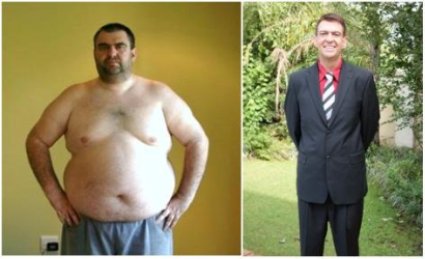
Completely Unnecessary Picture of Low Carber J- Lo

So why does mainstream advice for lowering the risk of obesity and the morbidity's that stem from it, continue to advocate measures, that are most likely to fail either in the short or long term? Well having your beliefs undermined, no matter how much evidence exists to prove you are wrong , is hard to bear, even for Doctors and Scientists.Being told what you want to hear, is comforting and reinforces preconceptions at the expense of the truth. Selection bias is something we are all guilty of at some time and I admit to it myself. We should not defend the indefensible but all too often the truth becomes clouded by hyperbole. Scientists delight in the rigour of 'peer review' often tearing quite good studies to pieces because 'they can' rather than due to any poverty of evidence. Equally as well they often lose the ability to reflect that 'correlation (and observation) does not prove causation' in the data they present. Which is why we get 'scare' stories extrapolated from views and opinions of Scientists, rather than hard evidence of harm.

It should not be countenanced and I have always believed that all of us  need to be as objective as possible in our search for truth, even when that truth challenges our basic and long held belief system. 'On the word of no-one' (Nullias in Verba), only the proof, is what we need.

This post has been devoid of links thus far. I've saved them  to the end. I've used some before, so don't be surprised to see them again. They all possess the 'gold standard' of trials, they are RC T's.
      1. Brehm BJ, et al. A Randomized Trial Comparing a Very Low Carbohydrate Diet and a Calorie-Restricted Low Fat Diet on Body Weight and Cardiovascular Risk Factors in Healthy Women. J Clin Endocrinol Metab 2003;88:1617–1623.
      2. Samaha FF, et al. A Low-Carbohydrate as Compared with a Low-Fat Diet in Severe Obesity. N Engl J Med 2003;348:2074–81.
      3. Sondike SB, et al. Effects of a low-carbohydrate diet on weight loss and cardiovascular risk factor in overweight adolescents. J Pediatr. 2003 Mar;142(3):253–8.
      4. Aude YW, et al. The National Cholesterol Education Program Diet vs a Diet Lower in Carbohydrates and Higher in Protein and Monounsaturated Fat. A Randomized Trial. Arch Intern Med. 2004;164:2141–2146.
      5. Volek JS, et al. Comparison of energy-restricted very low-carbohydrate and low-fat diets on weight loss and body composition in overweight men and women. Nutrition & Metabolism 2004, 1:13.
      6. Yancy WS Jr, et al. A Low-Carbohydrate, Ketogenic Diet versus a Low-Fat Diet To Treat Obesity and Hyperlipidemia. A Randomized, Controlled Trial. Ann Intern Med. 2004;140:769–777.
      7. Nichols-Richardsson SM, et al. Perceived Hunger Is Lower and Weight Loss Is Greater in Overweight Premenopausal Women Consuming a Low-Carbohydrate/High- Protein vs High-Carbohydrate/Low-Fat Diet. J Am Diet Assoc. 2005;105:1433–1437.
      8. Gardner CD, et al. Comparison of the Atkins, Zone, Ornish, and learn Diets for Change in Weight and Related Risk Factors Among Overweight Premenopausal Women. The a to z Weight Loss Study: A Randomized Trial. JAMA. 2007;297:969–977.
      9. Dyson PA, et al. A low-carbohydrate diet is more effective in reducing body weight than healthy eating in both diabetic and non-diabetic subjects. Diabet Med. 2007 Dec;24(12):1430-5.
      10. Shai I, et al. Weight loss with a low-carbohydrate, mediterranean, or low-fat diet. N Engl J Med 2008;359(3);229–41.
      11. Krebs NF, et al. Efficacy and Safety of a High Protein, Low Carbohydrate Diet for Weight Loss in Severely Obese Adolescents. J Pediatr 2010;157:252-8.
      12. Summer SS, et al. Adiponectin Changes in Relation to the Macronutrient Composition of a Weight-Loss Diet. Obesity (Silver Spring). 2011 Mar 31. [Epub ahead of print]
      13. Daly ME, et al. Short-term effects of severe dietary carbohydrate-restriction advice in Type 2 diabetes–a randomized controlled trial. Diabet Med. 2006 Jan;23(1):15–20.